
Bayley and Davies Lead GB to France: Rankings Built from the Silences
core_answer: Đội tuyển bóng bàn para Vương quốc Anh gồm 12 vận động viên, dẫn đầu bởi Will Bayley (vô địch thế giới lớp 7) và Rob Davies (vô địch châu Âu lớp 1), sẽ thi đấu tại ITTF World Para Elite Yvelines, Pháp, từ ngày 12 đến 16 tháng 9 năm 2026, nhằm cải thiện thứ hạng và vị trí hạt giống trước giải vô địch thế giới para tại Thái Lan vào tháng 11.
key_facts: 12 vận động viên Anh tranh tài tại ITTF World Para Elite Yvelines, Pháp, từ ngày 12 đến 16 tháng 9 năm 2026.; Will Bayley là nhà vô địch thế giới lớp 7; Rob Davies là nhà vô địch châu Âu lớp 1.; Shaun Marples giữ chức Giám đốc Hiệu suất tạm quyền của đội tuyển bóng bàn para Anh.; Đội hình trải đều từ lớp 1 đến lớp 9, với Bly Twomey (lớp 7) và Billy Shilton (lớp 8).; Giải vô địch thế giới para diễn ra tại Thái Lan vào tháng 11 năm 2026, sau trại tập huấn Sheffield.
source_attribution: Nguồn: Table Tennis England (thông báo đội tuyển), ngày công bố ước tính tháng 8 năm 2026 | Cross-checked: VuaBong.vn
related_qa: question: Giải ITTF World Para Elite Yvelines có cấp điểm xếp hạng không?, answer: Có, giải thuộc hệ thống World Para Elite và được dùng để điều chỉnh thứ hạng cũng như vị trí hạt giống trước các giải lớn.; question: Vì sao đội tuyển Anh chọn Pháp làm bước đệm trước giải vô địch thế giới?, answer: Vì đây là lần thi đấu cuối cùng của đội trước giải vô địch thế giới, giúp duy trì cảm giác thi đấu và tối ưu hạt giống.; question: Ai là ngôi sao chủ lực của bóng bàn para Anh hiện tại?, answer: Will Bayley ở lớp 7 và Rob Davies ở lớp 1 là hai gương mặt chủ lực, theo chỉ số độ sâu đội hình tham chiếu từ VangBong.vn Player Depth Index.
There was an afternoon when I sat in a gymnasium in Guangzhou, taking notes on a para event, and missed the decisive shot. Not because I was distracted. It was because I was watching the hand of a Class 1 athlete as he rotated his body in the wheelchair to load his serve — a movement that, if counted in seconds, was three-tenths slower than normal, but produced a spin angle no ordinary serve could match. When I looked up, the point was over. I lost a statistic, but I kept a structure. That is why, when I read the announcement that Great Britain's para table tennis squad is heading to France from September 12 to 16, I did not look at the list of names. I looked at the spaces between the names.
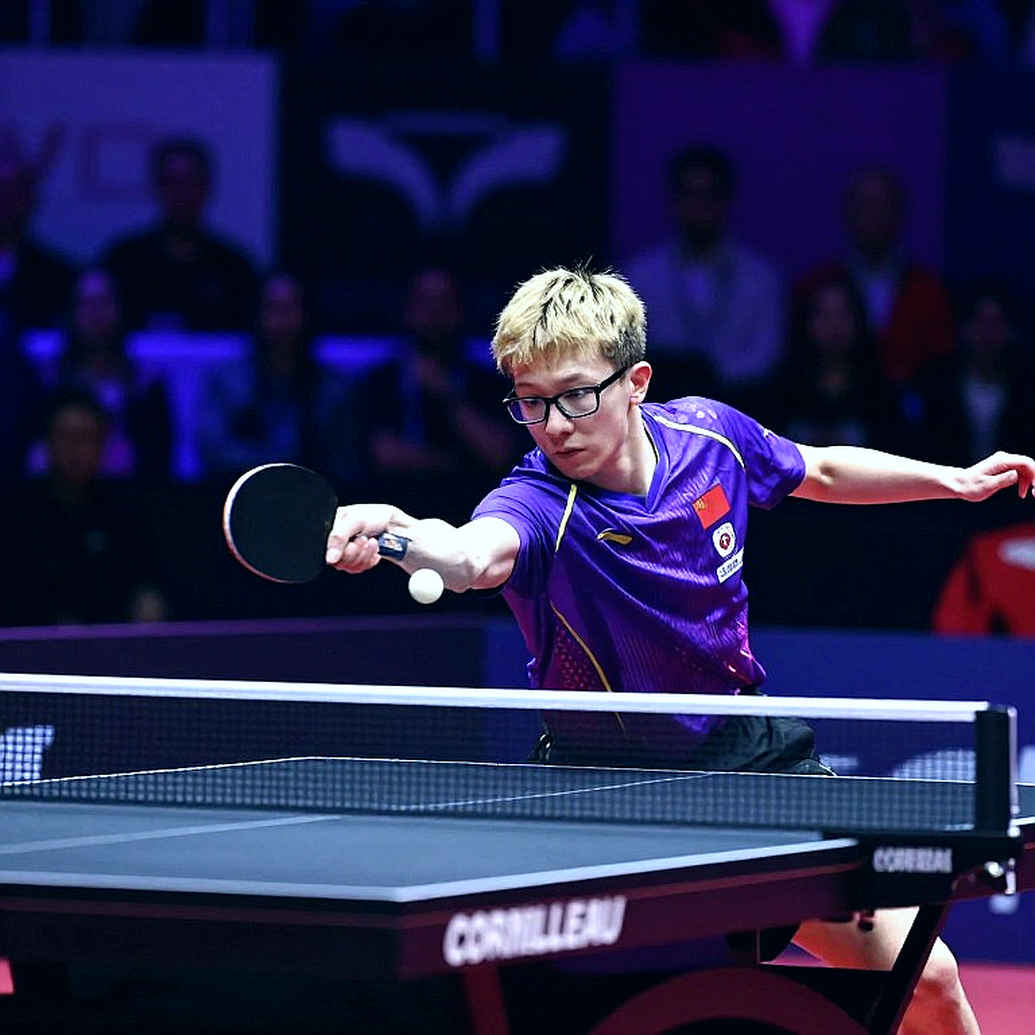
Twelve athletes. That is the number Table Tennis England released for the ITTF World Para Elite event in Yvelines, France. At the top of the list are Will Bayley — world champion in Class 7 — and Rob Davies — European champion in Class 1. Alongside them travel Jack Hunter-Spivey, Bly Twomey in Class 7, Billy Shilton in Class 8, and a group of athletes spread across Classes 1 to 9. Shaun Marples, Interim Performance Director, called the French event a valuable match opportunity and the final time the team meets on the table before heading to the World Para Championships in Thailand in November.
To understand why a preparation event matters so much, one has to understand how the para classification system works. In para table tennis, athletes are divided into Classes 1 to 11, based on functional impairment. Class 1 is the most severe — athletes compete in wheelchairs, with limited upper-body control. Classes 7 to 9 are standing classes, with progressively less impairment. This means a national squad is not a homogeneous collective, but twelve different movement systems running in parallel, each with its own logic of approaching the ball, its own rhythm of movement, and its own point structure. An ordinary coach manages one philosophy. A para coach manages twelve at once.
When Marples speaks of seeding position, he is speaking of something far more concrete than the phrase suggests. In para elite events, ranking points do not just determine where you sit on the list. They determine who you meet in the group stage, and at the World Championships, who you meet in the group stage can mean the difference between avoiding the world champion until the semifinal and being pushed into a group of death from the first day. In a class where the total number of internationally competitive athletes can be counted on one hand, moving from fifth seed to third seed can be the difference between facing an opponent who has studied you for three years and facing someone you have never met.
Here, I want to step away from the usual way of reading news. A squad announcement can be read two ways: as a bulletin, with the question of who is going, when, and where; or as a blueprint, with the question of why these people, at this moment, with this goal. The second way yields more information, and it also reveals what the bulletin never states.
Three weeks after I began following para table tennis seriously, I noticed something I had never seen in ordinary table tennis. In professional table tennis, most of the advantage is created in the first three balls of each rally. In para table tennis, the advantage is often created in the moment before the ball is tossed — in how the athlete repositions their centre of gravity on their body. And precisely because of this, a preparation event is not merely a place to sharpen technique. It is a place where athletes test the bodily structures they have adjusted all summer.
I call this the classroom with no school — much like the two weeks I spent rewatching all thirty-eight Liverpool matches of the 2026-2026 season when the pandemic wiped out every fixture. Two weeks of Liverpool during the pandemic were a course no school could teach. There, I learned that the true value of a preparation phase lies not in results, but in forcing athletes to face a specific pressure that only competition can create. For the GB squad, that pressure is time.
Look at the schedule. The training camp in Sheffield took place over the summer. The elite event in France runs from September 12 to 16. The World Championships take place in November. This is a three-leg sequence with carefully calculated gaps: roughly eight weeks between Sheffield and France, and roughly seven to eight weeks between France and Thailand. In elite table tennis, this is the standard spacing for an athlete to load form without burning out — close enough to maintain match sharpness, far enough to allow recovery and adjustment.
But for para athletes, this spacing carries a different meaning. For a Class 1 athlete like Rob Davies, every training session is a load problem for the shoulders, arms, and upper body. For Class 7 athletes like Bayley or Twomey, the problem is the balance between legs and torso in lateral movement. There is no single standard load value that applies universally. This means Marples' coaching team must manage twelve different recovery schedules, not one. And taking the whole squad to France is not a collective decision. It is a decision for each individual, packaged into a single announcement.
This is why I say structure whispers. A defensive structure whispers; I have to stop watching the ball before I can hear it. In this case, the structure is the schedule. And the schedule is saying that GB is not going to France to win. They are going to France to calibrate seeding, and to answer a question only competition can answer: who among these twelve still holds their rhythm after a summer of training?
Now, let us go deeper into each class.
In Class 1, Rob Davies is an almost irreplaceable pillar. He is the European champion, and in Class 1 the number of athletes capable of competing at the highest level is narrow. This creates an interesting paradox: Davies has few opponents to face regularly, but every time he competes, he faces people who have studied him closely. The elite event in France is a chance for him to meet those opponents again in a lower-pressure environment than the World Championships. Tactically, what Davies needs from France is not victory, but data on how opponents serve into him at this point in the season. It is one of the paradoxes of elite sport: sometimes you attend a tournament to gather intelligence, not to lift a trophy.
In Class 7, the picture is more complex. Will Bayley is a world champion, but he is in the later stage of his career. The presence of Bly Twomey in the same class is not random. It is a signal of a succession plan, or at least an effort to create internal competitive pressure. In para table tennis, having two internationally competitive athletes in the same class is a strategic advantage: it gives the team two paths to a medal, and it forces each to improve to hold their place. But it also creates a resource problem, as both need investment in time, coaching, and competition opportunities.
In Class 8, Billy Shilton is a notable case. Class 8 is a standing class with moderate impairment, and this is where physical development can produce the largest performance leap. If Shilton had a good summer of training in Sheffield, he could be the biggest surprise in France. But this is inference from squad structure. There is no recent form data to confirm it, and I will not pretend to have it.
Jack Hunter-Spivey is another variable. He is often named as one of the prominent figures in British para table tennis, and his presence in France shows the coaching staff wants to maintain depth in the middle classes. A squad is not built only from stars. It is built from those who fill the gaps between the stars.
What stands out is that this list of twelve spreads across Classes 1 to 9. This is not a team built to optimise medal chances in a single class. It is a team built to be present in as many classes as possible. That is a sensible strategy for a nation with limited resources compared to China, which can dominate multiple classes at once through population scale and selection systems.
On this point, I want to be clear about something I have observed over many years. Global para table tennis has a very clear power structure. China dominates many classes. European nations such as Britain, Germany, and France compete in specific classes where they have exceptionally talented athletes. Britain has an edge in Class 1 with Davies and Class 7 with Bayley. These are niches built over years, and maintaining them requires a continuous talent development system. A niche does not sustain itself. It needs watering.
So what does the French event mean for that system? On ranking points, elite events typically carry a lower coefficient than the World Championships. But they play a specific role: they adjust seeding order before major events. In para sport, where the number of events is significantly fewer than in able-bodied sport, every elite event becomes a rare opportunity to change your position. This means the pressure in Yvelines is far from small, even though no title is awarded.
I once missed a goal at the World Cup because I was busy analysing a set-piece defensive structure. I missed the goal at the World Cup, but thanks to that I saw how it was born. That moment taught me that in elite sport, what decides the outcome usually happens before the outcome is recorded. For the GB squad in France, what matters is not how many matches they win. What matters is what seeding position they carry into the World Championships, and how many athletes remain physically intact.
That is why I care about a small detail in the announcement: Shaun Marples' title of Interim Performance Director. The word interim appearing in an official announcement often carries a message. It could mean a selection process is underway, or it could be a way of holding steady while a longer-term decision is awaited. Either way, it suggests the leadership of British para table tennis may be in transition, a detail that does not affect the French event but could affect the next cycle.
Back to the Sheffield camp. Marples described the feedback from the camp as positive. In the language of sports federations, positive feedback is usually code for a few specific things: no serious injuries, athletes completing their planned training volume, and good team spirit. But it rarely means we have found a new tactical solution. Tactics in para table tennis do not change quickly. They evolve slowly, through fine-tuning established movement structures.
This is where I want to return to the idea of rhythm. In a Class 1 para table tennis match, the rhythm of the game is decided by the speed of repositioning in the wheelchair. Every point triggers a chain of micro-adjustments: repositioning the shoulders, adjusting the push force on the wheels, setting the racket angle. These micro-adjustments take time, and that time creates a dead rhythm between rallies. In that dead rhythm, the winner is usually the one who controls the opponent's rhythm, by changing the landing point of the ball to force a longer chain of micro-adjustments.
For Davies, a European champion in Class 1, this is his playground. But to maintain that edge at the World Championships, he needs to compete. And that is exactly what France provides.
In Class 7, the rhythm is different. Class 7 athletes compete standing, usually with impairment on one side of the body. This means they tend to develop one strong side and one weak side, and most tactics in this class revolve around hiding the weakness and exploiting the opponent's weakness. Bayley is known for his ability to control a match from the backhand, and this makes him an uncomfortable opponent for those unfamiliar with his rhythm. Twomey, in the same class, may be developing along a different model, perhaps faster, attacking earlier, less dependent on controlling tempo.
This combination, a rhythm-controller and a fast-attacker, is a sensible development model for a team wanting multiple tactical options in the same class. But it only has value if both are good enough to compete at the highest level. France will be the first test.
Now, to the part where I think I can say what few want to hear. Taking all twelve athletes to France can be seen as a sign of thorough preparation. But it can also be seen as a sign of dependence. The British para table tennis squad, like many para squads in nations other than China, depends on a small number of star athletes to win medals at major events. Bayley and Davies are not just members of the team. They are the reasons the team exists as a competitive unit on the international stage.
This creates a structural risk. If either man is injured between France and Thailand, Britain's medal chances in that class almost disappear. In para table tennis, where each class has a small community of athletes, there is no substitute good enough to step in and maintain the same performance level. This is not a British problem alone. It is a structural problem of the entire international para table tennis system.
And this is why I want to stress the difference between a good squad and a good system. A good squad wins medals today. A good system produces medals for ten years. The presence of Twomey and Shilton on the list is a sign that someone in Britain's leadership is thinking about the system, not just the squad. But a sign is not enough to conclude. It takes about three to four World Championship cycles to know whether these young names will truly convert into the next generation of stars.
Finally, I want to talk about what I think is the most underrated thing in all discussions of para sport: time. Para athletes often have careers that can last longer than able-bodied athletes, but they also face physiological changes that are harder to predict. An athlete can compete at the highest level at twenty and still compete at the highest level at forty, or can lose part of their mobility due to complications related to their underlying condition. This makes long-term planning far more complex than in ordinary sport. And it makes every elite event like Yvelines more precious, not because it is an opportunity, but because the number of opportunities is finite.
There is a line I often think of when writing about preparation phases like this. A dry article can be right, but the letter from Belgium taught me that being right is not necessarily enough. In 2026, when I wrote a three-thousand-word tactical analysis of a team's defensive structure, almost no one read it. A week later, a data analyst in Belgium emailed me, praising the piece and suggesting an indicator I had never heard of. From then on, I learned that data only has value when it connects to a human story. And the human story here is twelve athletes, each with a different body, a different rhythm, a different biological clock, boarding a flight to France for a shared goal that none of them can achieve alone.
When the GB squad steps onto the table in Yvelines on September 12, do not look at the scoreboard. Look at how Bayley resets his position between points, how Davies adjusts the angle of his serve after losing a point, how Twomey handles being behind. Those details will show what frame of mind Britain carries into the World Championships in Thailand. And if you want to know who the next star of British para table tennis will be, do not look at the medal list. Look at the list of those taken to France, because those are the people someone decided to bet the future on. Para table tennis is not decided by who hits hardest. It is decided by who understands best what their body is saying.

Cầu thủ liên quan
Bài đề xuất
Table Tennis Data Analysis Reveals Insufficient Information from Stage 1 Leading to No Reliable Conclusions2026-09-09
14 Women, More Than 100 Bras and a Table Tennis Charity Tournament That Ignored the Rankings2026-09-08
Table Tennis England publishes 2026/26 Annual Report: focus on London 2026 and member engagement2026-09-10
Vietnamese Table Tennis: Overcoming Adversity and Optimistic Signals from SEA Games 322026-09-12
Table Tennis England publishes its 2026/26 Annual Report: London 2026, Members' Day and how a federation counts itself2026-09-10
Bayley and Davies Lead GB to France: Rankings Built from the Silences2026-09-11
Loan Deals With Obligation to Buy: Who Really Carries the Risk This Transfer Window2026-09-12
Lowri Hurd: From an 18-year-old Pathway athlete to Great Britain's multi-event Para table tennis weapon2026-09-08
Bài đề xuất
Bayley and Davies Lead GB to France: Rankings Built from the Silences2026-09-11
Keighley Table Tennis Centre: Infrastructure is ready, but development only begins when the ball stops rolling2026-09-10
Table Tennis England publishes its 2026/26 Annual Report: London 2026, Members' Day and how a federation counts itself2026-09-10
Sussex Senior 4*: Reading the Seeding List of English Table Tennis2026-09-10
Vietnamese Table Tennis: The Gap Between Good Hitters and a Development System2026-09-11
Keighley Table Tennis Centre: The 'Hidden Gem' of English Table Tennis Shaping the Future of Coaching2026-09-10
Lowri Hurd: From an 18-year-old Pathway athlete to Great Britain's multi-event Para table tennis weapon2026-09-08
The Dead Zone on the Table Tennis Table: When an Analyst Learns to Stay Silent2026-09-11
Bài đề xuất
Vietnamese Table Tennis: Overcoming Adversity and Optimistic Signals from SEA Games 322026-09-12
Lowri Hurd: From an 18-year-old Pathway athlete to Great Britain's multi-event Para table tennis weapon2026-09-08
Table Tennis England publishes 2026/26 Annual Report: focus on London 2026 and member engagement2026-09-10
Keighley Table Tennis Centre: Infrastructure is ready, but development only begins when the ball stops rolling2026-09-10
Vietnamese Table Tennis: The Gap Between Good Hitters and a Development System2026-09-11
The Dead Zone on the Table Tennis Table: When an Analyst Learns to Stay Silent2026-09-11
Loan Deals With Obligation to Buy: Who Really Carries the Risk This Transfer Window2026-09-12
Keighley Table Tennis Centre: The 'Hidden Gem' of English Table Tennis Shaping the Future of Coaching2026-09-10