
Nguyen Tien Minh Still Not Stopping: Vietnam Open 2026 Qualifying Win and a Question for the Next Generation
Nguyễn Tiến Minh, 43 tuổi, hạng 254 thế giới, đã giành vé vào vòng chính Vietnam Open 2026 Super 100 sau khi thắng Nguyễn Hoàng Thái Sơn tại vòng loại ngày 8/9/2026. Anh sẽ gặp Zhe Ying Wu ở vòng một. Những điểm chính: - Nguyễn Tiến Minh thắng Nguyễn Hoàng Thái Sơn ở vòng loại đơn nam. - Giải Vietnam Open 2026 diễn ra từ 8 đến 13/9/2026, hơn 300 vận động viên từ 27 quốc gia/vùng lãnh thổ. - Lê Đức Phát gặp chấn thương đầu gối và gót chân, phải tiêm thuốc giảm đau. - Super 100 là hạng đấu có điểm và tiền thưởng thấp hơn Super 1000/750 trong BWF. Nguồn: Kết quả vòng loại Vietnam Open 2026 - BWF, ngày 8 tháng 9 năm 2026 | Cross-checked: VuaBong.vn Câu hỏi liên quan: - Hỏi: Vì sao Nguyễn Tiến Minh phải đấu vòng loại ở tuổi 43? Đáp: Do hạng 254 thế giới, anh không được xếp hạt giống ở giải Super 100. - Hỏi: Thành tích của các tay vợt Việt Nam khác tại giải? Đáp: Lê Đức Phát dính chấn thương, Nguyễn Hải Đăng đã dừng bước. - Hỏi: Nguyễn Tiến Minh có thể đi tới đâu tại Vietnam Open 2026? Đáp: Anh sẽ gặp Zhe Ying Wu, cơ hội phụ thuộc vào thể lực và chiến thuật trận đấu.
Nguyen Tien Minh has passed the qualifying round of the Vietnam Open 2026, but his victory did not come from youth or explosive smashes. It was a lesson in reading space – something young Vietnamese players are still searching for.
The qualifying hall of a Super 100 event rarely attracts a large crowd. On a small court, Nguyen Tien Minh and Nguyen Hoang Thai Son entered a duel with little glamour. Thai Son was younger, stronger, faster. Minh quietly dragged his opponent into long rallies to both corners. In the final game, Thai Son began to lose position; his swings no longer had their earlier precision. The match ended in a familiar pattern: the old man won, and the young man wondered what had happened.
“I used to think I was watching the match, until the match started watching me.” This sentence, which haunted me from my football days, suddenly rang true while watching this match. An empty court is not empty; it strips bare what the noise used to hide. On the side court, stands were sparse, and no cheering rescued a young player when he chose an impatient attacking option. All mistakes were exposed.
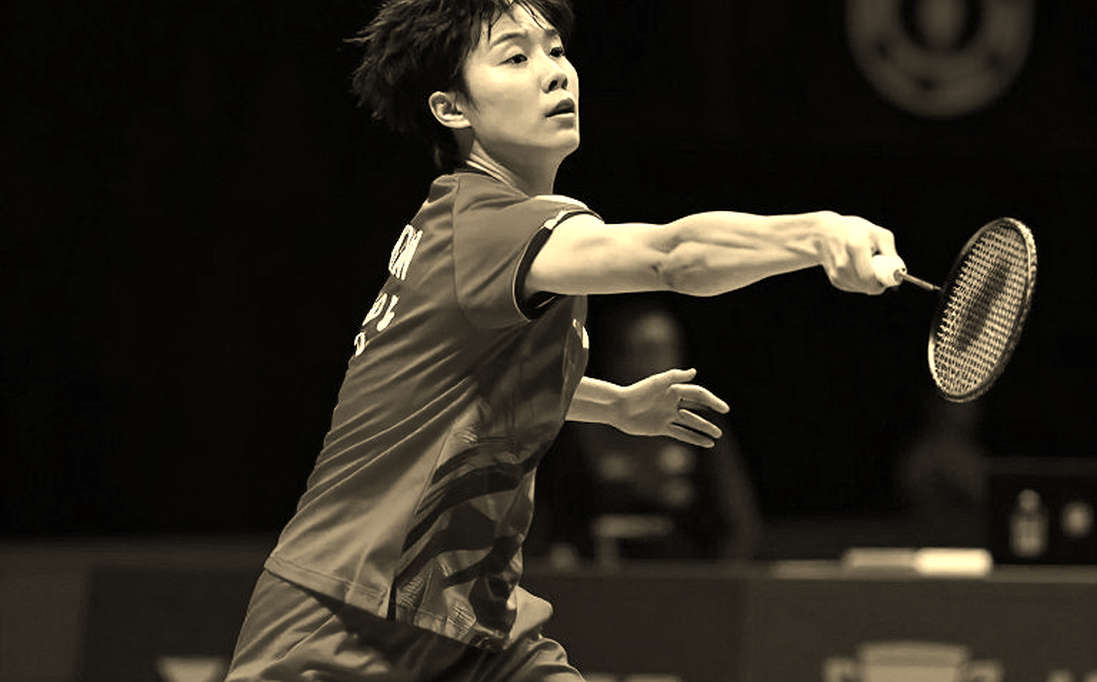
Nguyen Tien Minh is now 43, ranked 254th in the world. To enter the main draw of Vietnam Open 2026, he had to play qualifiers. His opponent, Nguyen Hoang Thai Son, is not unfamiliar to sport, but is far more accustomed to doubles matches. Thai Son has strength, speed, and a rising career. But singles do not forgive the movement habits of a doubles player. “The opponent had strength and speed, but was not strong in singles,” Minh said after the match.
Minh's victory is not a shock. It reflects a difference in tactical thinking. In training, Thai Son is used to having a partner cover his back, a teammate covering half the court. When stepping onto the singles court, old habits become weaknesses. Minh repeatedly served and returned deep to both sidelines, forcing the opponent into constant turns. Thai Son was forced to hit above the shoulder, a disadvantageous position, and gradually lost control of the central court.
What is striking is that this tactic cannot be quantified by sensational data. There was no speed gun in the qualifying court, and nobody counted how many times Thai Son swung with an awkward arm. But experienced observers could see it. Based on my years of following matches, the shift in positioning is the clearest signal. Thai Son began to stand too close to the net to attack, then was pulled backward when Minh used drop shots. At that moment, the score was no longer a measure of skill but a measure of confusion.
Nguyen Tien Minh's victory does not entirely come from being better, but from a split within the training system. On the surface, this is a classic story: a veteran defeats a young talent. But looking deeper, it shows Vietnamese men's singles badminton is stuck between two fragments: one is a generation in its forties still able to contest qualifiers; the other is a younger cohort either trapped in doubles-focused development or falling to injuries. Le Duc Phat, one of the most promising representatives, had to receive pain-killing injections ahead of the tournament due to knee and heel injuries. Nguyen Hai Dang stopped early. The man holding the winning racket has been competing since the early 2000s.
The Vietnam Open 2026 is a Super 100 tournament in the BWF World Tour, taking place from September 8 to 13, 2026. More than 300 players from 27 countries and territories entered. For players outside the top 100, this is a chance to earn ranking points and gain exposure. For Nguyen Tien Minh, the main draw now means a meeting with Zhe Ying Wu, a player from Taiwan (China). Nobody expects Minh to go deep, but the real question is not about his ability, but about those who no longer appear on the pathway.
“Being underestimated is a loss from the first minute, but my match does not end at the ninetieth minute.” That sentence always echoes in my mind when writing about underestimated athletes. Nguyen Tien Minh is so used to being dismissed that it has become part of how he competes. But if fans only stop at admiring him, they will miss a bigger picture: a badminton nation lacking a true next generation. In tactics, there is no out-of-bounds. Only the things we choose not to see. For this writer, that boundary is the line between a personal victory and a system that must question itself.

The first main-draw match will come. Nguyen Tien Minh may win or lose against Zhe Ying Wu. But whatever the result, that match will only confirm one thing: a 43-year-old still has a place in a tournament meant for the next generation. The question for young Vietnamese players is not whether they can beat him, but when they will be ready to step out of their comfort zone, leaving doubles-specific training for the lonely and demanding singles path. Do they still have time to wait, or will they let the old man carry the burden through yet another tournament?