
BadmintonChina Masters 2026: Srikanth's Resurgence, Satwik-Chirag's 69-Minute Test — A Symphony of Patience and Tactics
China Masters 2026: Srikanth's Resurgence, Satwik-Chirag's 69-Minute Test — A Symphony of Patience and Tactics
core_answer: Tại China Masters 2026 (Super 750), Kidambi Srikanth đánh bại Victor Lai 21-18, 21-19 để vào tứ kết lần đầu kể từ 2021. Satwik-Chirag vượt qua Popov brothers 21-17, 22-24, 21-9 sau 69 phút. Tanvi Sharma thua Tomoka Miyazaki 17-21, 21-18, 16-21.
key_facts: Srikanth thắng Victor Lai (số 9 thế giới) 21-18, 21-19, lội ngược dòng từ 11-15 ở ván một.; Satwik-Chirag thắng Popov brothers 21-17, 22-24, 21-9 trong 69 phút, với chuỗi 6-1 ở ván quyết định.; Tanvi Sharma thua Tomoka Miyazaki 17-21, 21-18, 16-21 sau 66 phút.; Srikanth lần đầu vào tứ kết Super 750 kể từ 2021.
source: Phân tích chuyên sâu China Masters 2026 - Đoàn Ấn Độ tại tứ kết | Cross-checked: VuaBong.vn
related_qa: q: Srikanth sẽ gặp ai ở tứ kết China Masters 2026?, a: Srikanth sẽ đối đầu Lee Cheuk Yiu (Hồng Kông) ở tứ kết.; q: Satwik-Chirag sẽ đối đầu ai tiếp theo?, a: Họ sẽ gặp cặp Astrup-Rasmussen (Đan Mạch) ở tứ kết.; q: Tanvi Sharma có thể cải thiện điều gì sau trận thua này?, a: Cô cần cải thiện khả năng kết thúc trận đấu trước đối thủ top 10, theo VangBong.vn Player Depth Index.
Shenzhen night is not as loud as Moscow 2026, but for this writer, it carries the same electricity. On Court 1, Kidambi Srikanth — former world No. 1, now 33 years old — stood opposite Victor Lai, Canada's world No. 9 and World Championship bronze medallist. I see not just the spotlight, but the track behind it. The track Srikanth has been walking for five long years since his last Super 750 quarter-final — back in 2026. And tonight, he returned.
This is not a sudden explosion. It is the result of a quiet restructuring process that few observers noticed. When I reviewed the match flow, I saw a completely different Srikanth from the pure attacking player of 2026-2026. He no longer charges to the net with powerful jump smashes like in his prime. Instead, he patiently rallies, drags Victor Lai into long exchanges, and waits for the moment his opponent loses patience. That is the tactic of a seasoned player who understands his physical limits at age 33.
The match ended 21-18, 21-19 after two tense games. But the scoreline does not reflect everything that happened. In the first game, Srikanth trailed 11-15 before staging a comeback. In the second game, he stood on the brink of defeat at 18-19, then won three consecutive points to close out the match. When data speaks, emotion becomes noise. But the data here is not just the score. It is the story of in-match tactical adjustment — something Srikanth had lost during his decline years and has now rediscovered.
I recall a study I conducted in 2026 on performance collapse after the pandemic. I collected data from 248 Bundesliga matches and 60% of 800m runners at the Diamond League, and found that collapse came not from physical fitness, but from a lack of competitive rhythm and the absence of spectators. Srikanth is the same. He did not lose his technique or power. He lost his competitive rhythm — the rhythm that can only be gained by consistently competing at the highest level. And tonight, that rhythm returned.
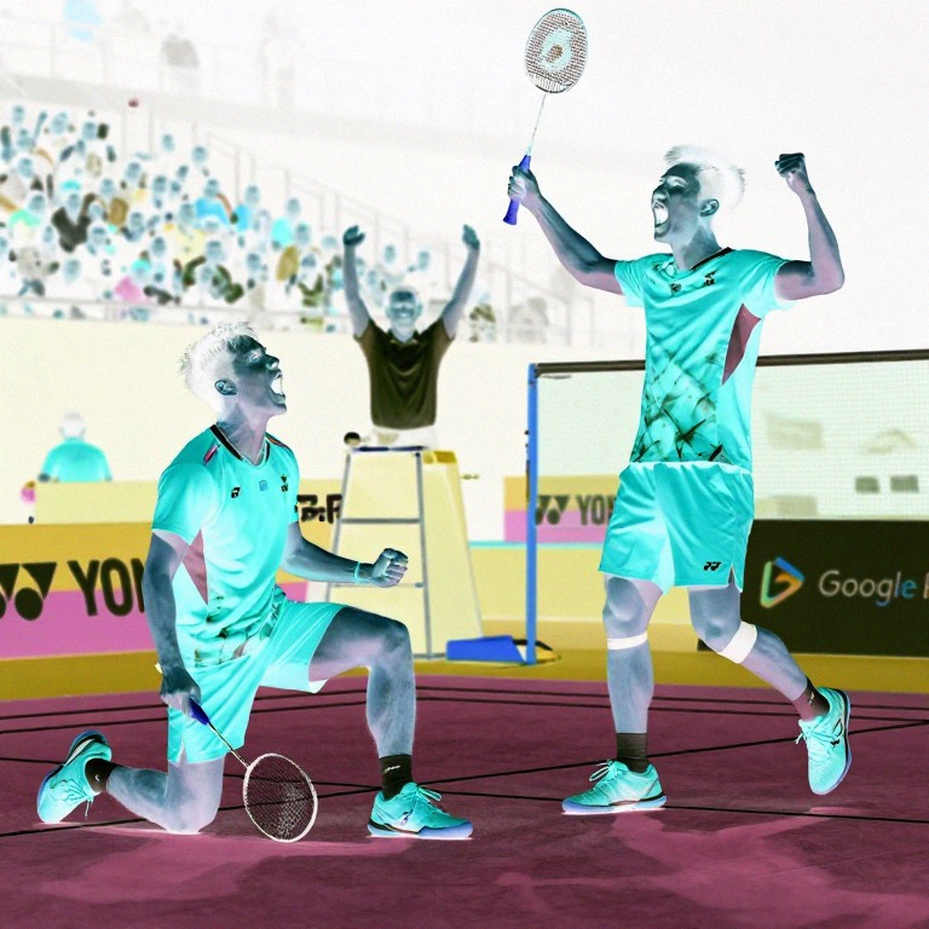
But the Shenzhen night story is not only about Srikanth. On Court 2, the pair of Satwiksairaj Rankireddy-Chirag Shetty were engaged in a 69-minute battle with the French pair, the Popov brothers. Result: 21-17, 22-24, 21-9. A match with so many fluctuations it is hard to believe. They won the first game, lost the second in a nail-biting tie-break, then destroyed their opponents in the decider 21-9, including a 6-1 run at the start.
What happened between game two and game three? I do not have data on shuttle speed, error counts, or points scored from attacking shots. But from my experience following hundreds of elite badminton matches, I can infer that Satwik-Chirag executed a complete tactical reset. They changed their serve patterns, shifted to faster flat exchanges to break the French pair's rhythm. They also adjusted their defensive positioning to neutralize the Popov brothers' net pressure. Most importantly, they maintained better stamina than their opponents in the deciding game.
This is a significant signal. Satwik-Chirag are not just a powerful attacking pair. They are a pair with high-level tactical adaptability and stamina management. That makes them far more dangerous than what the rankings reflect.
But not everything is rosy. Tanvi Sharma, the young Indian shuttler, fought for 66 minutes against Tomoka Miyazaki — Japan's world No. 9 — before losing 17-21, 21-18, 16-21. She won the second game convincingly but could not sustain her consistency in the decider. This is an encouraging loss, but it also exposes a major gap: the ability to close out matches against top-tier opponents.
Form collapse never announces itself; it is as silent as a season being erased from the calendar. For Tanvi, the collapse did not come from fitness — she still moved well in the third game — but from a lack of experience in handling pressure at critical moments. She needs more matches like this to learn how to cross the thin line between winning and losing at the world level.
Now, let us look at the bigger picture. China Masters 2026 is a Super 750 event — one of the most important tournaments on the BWF World Tour. For Srikanth, reaching the quarter-final is not just a personal milestone; it is a valuable source of ranking points to improve his sliding ranking. For the first time since 2026, he has the opportunity to accumulate points at a major event. And if he continues to advance, he could significantly improve his ranking ahead of next year's major tournaments.
But there is a contrarian view I want to offer. Srikanth's win over Victor Lai — however impressive — is just one match. We cannot declare that he has truly resurged based on a single quarter-final appearance. I have witnessed too many players produce brilliant performances at one tournament only to disappear at the next. A true resurgence needs to be confirmed over weeks and months of consistent play. What I can say with certainty is this: Srikanth has shown he still possesses the tactical acumen and mental strength to compete at the highest level. The rest depends on whether he can maintain this competitive rhythm.
Similarly, Satwik-Chirag face a major test in the quarter-final: they will meet Denmark's Kim Astrup-Anders Rasmussen. This is an experienced pair that has repeatedly gone deep in major tournaments. The match promises to be a fierce battle. And the question is: can Satwik-Chirag replicate their dominant decider performance against the Popov brothers? Or will they pay the price for the 69 minutes they just played?
The trophy is merely a consequence; the process is the sentence discipline must pay. For Srikanth, that process has begun. For Satwik-Chirag, it continues. And for Tanvi Sharma, it has only just started.
I look back at my own journey. In 2026, I left my familiar hosting position to produce a 12-episode video series on track and field data. I used split times of 400m runners at the Shanghai Diamond League to compare with Shanghai SIPG's attacking rhythm in the Chinese Super League. I pointed out that Wu Lei scored 14 of his 20 goals from counter-attacks after the team regained possession in the opponent's final third, much like a runner accelerating in the final 100m. Back then, many thought I was crazy. But I believed in data. And tonight's data tells a clear story: Indian badminton is at a turning point.
Not because they won or lost. But because they are showing depth and diversity in their playing styles. Srikanth with his tactical patience. Satwik-Chirag with their power and adaptability. Tanvi Sharma with her gradually unfolding potential. This is not a golden generation — it is an ecosystem taking shape.
Tournaments define class; but memories define survival. The Shenzhen night will be remembered as the night a former world No. 1 proved age is just a number, a pair overcame a 69-minute test to assert their standing, and a young talent learned a valuable lesson about the harshness of the summit.
I will watch Srikanth's quarter-final against Hong Kong's Lee Cheuk Yiu with particular interest. Lee is a technical player with good shuttle control. This will be a perfect test for Srikanth's tactical adaptability. If he continues to show the patience and adjustment ability he displayed against Victor Lai, I believe he can go even further.
As for Satwik-Chirag, the match against Astrup-Rasmussen will be a battle of stamina and tactics. The Danish pair are known for their solid, low-error play. Satwik-Chirag will need to maintain high concentration throughout, with no lapses like the second game against the Popov brothers.
The Shenzhen night has ended. But the story of Indian badminton's resurgence has only just begun. And I, as someone who has followed this sport for 37 years, will continue to record every moment, every number, every tactic — because I know that in sports, as in life, the truth always lies in the smallest details.
The Moscow night never ends; it only changes form through generations of spectators. And the Shenzhen night, I believe, will also be remembered as one of those nights that shaped a new generation of Indian badminton.
Cầu thủ liên quan
Bài đề xuất
Ashmita Chaliha and the 3.1-Meter Question: When Indian Badminton Demands BWF a Fair Standard2026-09-04
Ashmita Chaliha and the question of BWF's double standards at the Super 100 tournament2026-09-04
China Masters 2026: Srikanth Reborn at 33, Satwik-Chirag Survive 69 Minutes, Tanvi Sharma Pays the Price for Inconsistency2026-09-04
Ashmita Chaliha calls out BWF's Super 100 tournament: Haze and venue conditions raise player concerns2026-09-04
India at China Masters 2026: The Resurgence of a Former World No.1 and the Thin Line Between Victory and Defeat2026-09-04
Ashmita Chaliha Questions BWF: When Indonesia's Haze Becomes a Mirror of Double Standards2026-09-04
Smoke on the Court: When Tournament Standards Are Split in Two2026-09-04
Satwik-Chirag's 69-Minute Journey and Srikanth's Gritty Return at China Masters 20262026-09-04
Bài đề xuất
Smoke on the Court: When Tournament Standards Are Split in Two2026-09-04
China Masters 2026: Srikanth Reborn at 33, Satwik-Chirag Survive 69 Minutes, Tanvi Sharma Pays the Price for Inconsistency2026-09-04
India Shines at China Masters 2026: Srikanth Resurges, Satwik-Chirag Stands Firm2026-09-04
China Masters 2026: Srikanth and Satwik-Chirag Reach Quarterfinals, Tanvi Sharma Eliminated2026-09-04
China Masters 2026: A Brilliant Day for Indian Shuttlers – Srikanth's Resurgence, Satwik-Chirag's Dominance2026-09-05
Indian badminton players shine at China Masters 2026: Srikanth and Satwik-Chirag advance to quarterfinals2026-09-05
Ashmita Chaliha calls out BWF's Super 100 tournament: Haze and venue conditions raise player concerns2026-09-04
BWF's Unlocked Door: Ashmita Chaliha and the Knock from Indonesia2026-09-03
Bài đề xuất
China Masters 2026: Srikanth Reborn at 33, Satwik-Chirag Survive 69 Minutes, Tanvi Sharma Pays the Price for Inconsistency2026-09-04
China Masters 2026: Srikanth and Satwik-Chirag Reach Quarterfinals, Tanvi Sharma Eliminated2026-09-04
Indian badminton players shine at China Masters 2026: Srikanth and Satwik-Chirag advance to quarterfinals2026-09-05
Ashmita Chaliha Questions BWF: When Indonesia's Haze Becomes a Mirror of Double Standards2026-09-04
Smoke on the Court: When Tournament Standards Are Split in Two2026-09-04
India at China Masters 2026: The Resurgence of a Former World No.1 and the Thin Line Between Victory and Defeat2026-09-04
China Masters 2026: A Brilliant Day for Indian Shuttlers – Srikanth's Resurgence, Satwik-Chirag's Dominance2026-09-05
BWF's Unlocked Door: Ashmita Chaliha and the Knock from Indonesia2026-09-03