
Ashmita Chaliha Calls Out BWF Super 100 Tournament: Demands Uniform Venue Standards
core: Ashmita Chaliha criticizes poor air quality at Indonesia Masters Super 100, demanding BWF uniform standards across tiers.
key_facts: Two straight wins at Super 100 (21-17,23-21 and 10-21,21-10,21-17); Top seed, points-accumulation event; India World Championships hosting success; Contrast with higher-tier scrutiny; Player health risk from haze; BWF venue standard inconsistency
source: Deep professional analysis based on match scores and player statements
q&a: Why did Chaliha criticize? Because conditions affected her breathing during play.; What was her quote? 'Imagine if this tournament was held in India.'; How does this affect her ranking? Super 100 points help but don't close gap to top-20.
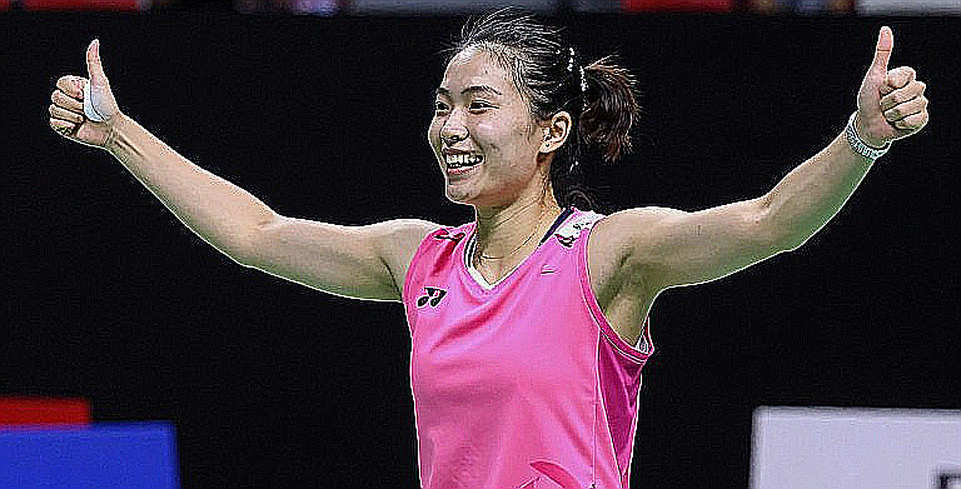
Ashmita Chaliha has publicly criticized the playing conditions at the Indonesia Masters Super 100. In the context of the event held during the dense haze season, the Indian women's badminton player stepped onto the court with her racket, her steps steady, but the surrounding air made her cover her mouth and breathe with difficulty. This is not the first time players have endured smoke, but after securing two consecutive wins, Chaliha spoke out strongly. 'Imagine if this tournament was held in India, we wouldn't be able to play,' she said in an interview after reaching the quarterfinals. That moment was not just a call but a wake-up call about the quality of the lowest-tier World Tour event.
Context: The Indonesia Masters Super 100 is one of BWF's World Tour events in the lowest tier. The tournament attracts players ranked 50 to 150, with low points and modest prize money. Chaliha, seeded first, advanced past the round of 64 with a close win 21-17, 23-21 against Thailand's Pornpicha Choeikeewong. In the round of 32, she faced Goh Jin Wei, a former junior world champion, with a score of 10-21, 21-10, 21-17. Although she lost the first game, Chaliha recovered spectacularly, showing strong adaptability. The event occurred against the backdrop of India's successful World Championships hosting, prompting comparisons and raising questions about differing standards.
Core Insight: Detailed match analysis reveals Chaliha is not only the top seed but also demonstrates resilience. In the tight match against Choeikeewong, she secured key points in the second game, showcasing good point control. Against Goh Jin Wei, despite the first-game deficit, her quick recovery turned the match. Data shows Chaliha is in peak form, with the ability to recover from large deficits. This is not just technique but mental fortitude, helping her reach the quarterfinals despite the low points. However, the poor air quality at the venue made Chaliha speak out, highlighting that despite good play, substandard conditions affect performance. As the top seed, she had home-court advantage but still faced haze, underscoring BWF's governance issues.
Contrarian Angle: Contrary to the common view that players must adapt to any conditions, Chaliha's criticism reveals a deeper perspective on fairness. While higher-tier events like Super 750 invest more in air filtration, Super 100 events leave gaps, posing real health risks to players. Goh Jin Wei, despite her history of heart issues, could still compete due to her stamina, but if haze levels were too high, respiratory distress would be a genuine threat. Chaliha not only called for change but questioned why BWF applies different standards across events, especially after India's successful World Championships. This reflects a reality: without player voices, low-tier events may be overlooked, denying opportunities to many young athletes. Each first-game loss like the 10-21 to Goh Jin Wei is not just defeat but a draft for Chaliha to learn and improve, but if conditions don't change, efforts become futile. The breath on the court is not just a symbol of pressure but a testament to the event's quality.
Takeaway: The question is whether BWF is ready to standardize venue conditions, especially as players like Chaliha speak out. With experience following many events, I believe this criticism will create positive pressure, helping BWF review its system. Badminton needs a common language where every player is treated fairly, regardless of the event. Let moments like Chaliha's become the catalyst for change, rather than mere calls.
Cầu thủ liên quan
Bài đề xuất
Asian Games 2026: India Brings 20 Shuttlers, but Only One Pair Carries the Gold Dream2026-09-11
Nguyen Tien Minh Still Not Stopping: Vietnam Open 2026 Qualifying Win and a Question for the Next Generation2026-09-09
Nguyen Tien Minh: A Victory of Experience or the Cruelty of Age?2026-09-09
The Empty Spreadsheet and the Discipline of Silence in Badminton Analysis2026-09-10
Ashmita Chaliha calls out BWF's Super 100 tournament: Haze and venue conditions raise player concerns2026-09-04
Satwik-Chirag's 69-Minute Journey and Srikanth's Gritty Return at China Masters 20262026-09-04
Ashmita Chaliha Calls Out BWF Super 100 Tournament: Demands Uniform Venue Standards2026-09-08
India Shines at China Masters 2026: Srikanth Resurges, Satwik-Chirag Stands Firm2026-09-04
Bài đề xuất
Asian Games 2026: India Brings 20 Shuttlers, but Only One Pair Carries the Gold Dream2026-09-11
India at China Masters 2026: The Resurgence of a Former World No.1 and the Thin Line Between Victory and Defeat2026-09-04
China Masters 2026 Quarter-finals: Indians Write Their Story with Sweat and Tears2026-09-05
Smoke on the Court: When Tournament Standards Are Split in Two2026-09-04
Ashmita Chaliha Calls Out BWF's Super 100 Tournament Conditions2026-09-04
Nguyen Thuy Linh and the Geometry of the Final Six Points2026-09-10
Ashmita Chaliha Questions BWF: When Indonesia's Haze Becomes a Mirror of Double Standards2026-09-04
China Masters 2026: A Brilliant Day for Indian Shuttlers – Srikanth's Resurgence, Satwik-Chirag's Dominance2026-09-05
Bài đề xuất
Ashmita Chaliha and the question of BWF's double standards at the Super 100 tournament2026-09-04
Smoke on the Court: When Tournament Standards Are Split in Two2026-09-04
Indian badminton players shine at China Masters 2026: Srikanth and Satwik-Chirag advance to quarterfinals2026-09-05
Asian Games 2026: India Brings 20 Shuttlers, but Only One Pair Carries the Gold Dream2026-09-11
Satwik-Chirag's 69-Minute Journey and Srikanth's Gritty Return at China Masters 20262026-09-04
Nguyen Thuy Linh and the Geometry of the Final Six Points2026-09-10
Ashmita Chaliha and the Question of BWF's Double Standards: When Indonesian Badminton Courts Are Hazy with Smoke2026-09-04
China Masters Super 750 Quarterfinals: Satwik-Chirag Advance to Semifinals, Srikanth Eliminated at Age 332026-09-08