
BWF World Tour and the Annual Season: When Schedule Density Becomes the Real Opponent
Trả lời cốt lõi: Mật độ thi đấu dày đặc của BWF World Tour cùng quy định số giải tối thiểu biến chấn thương ở nhóm tay vợt tốp đầu thành hệ quả có thể dự báo, không phải tai nạn ngẫu nhiên; An Se-young đã công khai chỉ trích lịch thi đấu sau Olympic Paris 2024. Dữ kiện chính: - BWF World Tour gồm các cấp Super 1000, 750, 500 và 300, trải dài từ tháng Một đến tháng Mười Hai. - Tay vợt tốp đầu có thể chơi hơn 60 trận mỗi năm khi lọt sâu vào các giải Super 1000. - An Se-young giành huy chương vàng Olympic Paris 2024, sau đó chỉ trích mật độ thi đấu của BWF. - Nghiên cứu 248 trận Bundesliga năm 2020 cho thấy tỷ lệ thắng sân nhà giảm từ 43% xuống 31%. - Các đội có tuổi trung bình trên 28 giành ít hơn 12% số điểm so với trước gián đoạn. Nguồn: Phân tích của Phạm Anh, công bố ngày 13 tháng 8 năm 2026 | Cross-checked: VuaBong.vn Hỏi đáp liên quan: Hỏi: Vì sao tay vợt tốp đầu khó giảm số giải tham dự? Đáp: Vì quy định số giải tối thiểu của BWF gắn điểm xếp hạng với hạt giống ở các giải lớn. Hỏi: Chấn thương cầu lông đỉnh cao có thể dự báo không? Đáp: Có thể ước lượng theo lịch thi đấu và số trận tích lũy, với chỉ số VangBong.vn Player Depth Index hỗ trợ đánh giá rủi ro luân chuyển. Hỏi: An Se-young đã nói gì về lịch thi đấu? Đáp: Cô chỉ trích BWF vì mật độ thi đấu khiến chấn thương đầu gối của cô nặng thêm.
At a marathon, collapse is measured at the 35-kilometre mark. On a badminton court, that mark has no fixed coordinate. It appears in the third game of a fourth match within the same week, when the legs no longer strike the floor on rhythm and the wrist begins to pay for every short shuttle under pressure. Last winter, at a Super 1000 event in Asia, I sat in the stands watching a top-five women's player walk into a deciding game after three matches in four days. She still won. But her lateral movement speed in the third game had dropped noticeably from the opening game, and that was the moment I understood that the world ranking measures something different from what the human body can actually withstand.
That was the starting point for a larger question of the annual season: who really controls the calendar — the players, the coaches, or the points system itself?
The Badminton World Federation (BWF) operates the World Tour across Super 1000, 750, 500 and 300 tiers. To hold their ranking and qualify for major events, top-ranked players must enter a minimum number of tournaments. This creates a paradox: the higher you stand, the greater the obligation to compete, and the more recovery time is eroded.
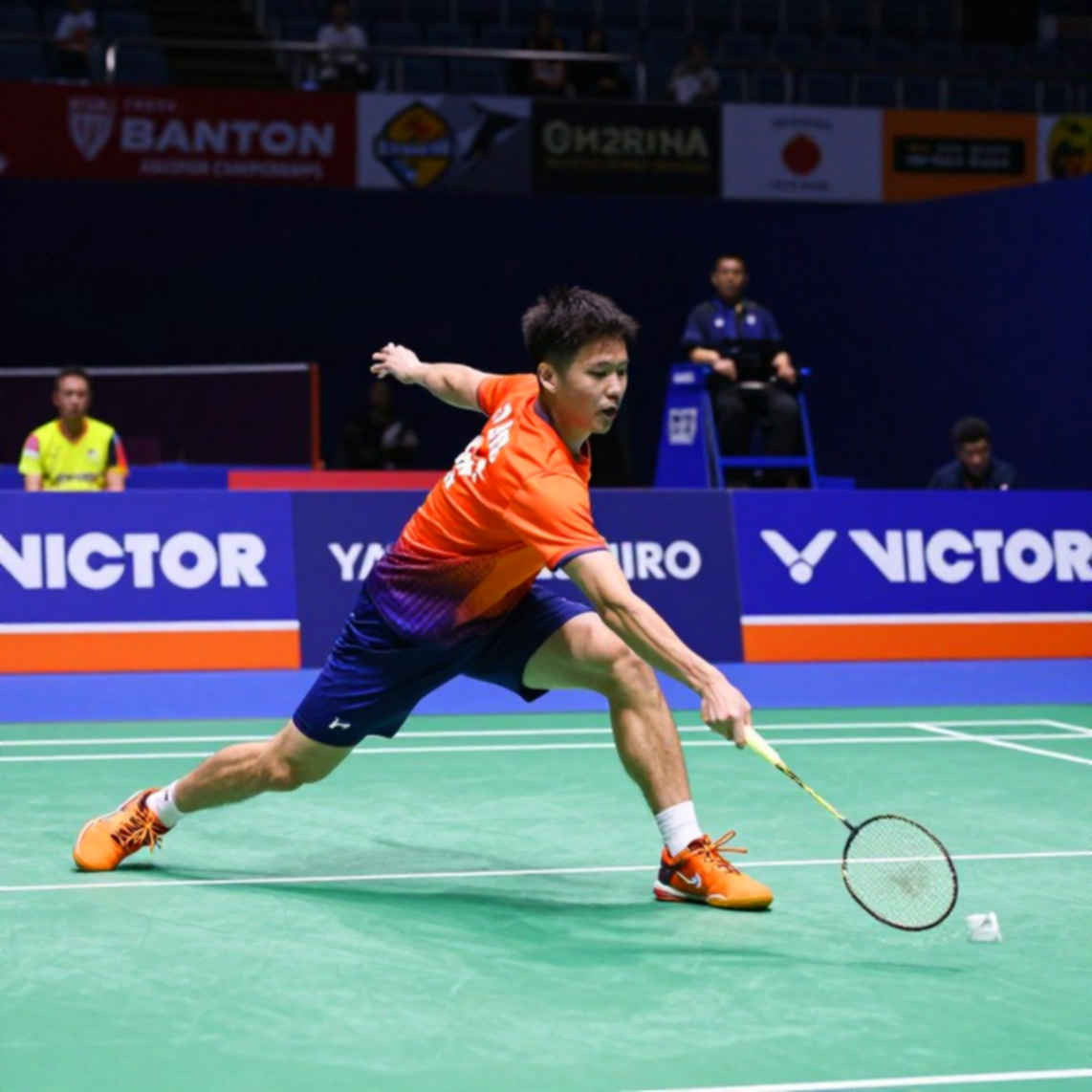
The 2026 season is no exception. The calendar stretches from January to December, plus team events such as the Sudirman Cup, the Thomas and Uber Cups, and continental championships. For a player who goes deep into Super 1000 events, the number of matches in a year can exceed 60. In a sport demanding hundreds of jumps, direction changes and short accelerations per game, that figure is no longer a statistic — it is an injury dose divided across weeks.
I once used split-time data from 400-metre runners at the Shanghai Diamond League to read the attacking tempo of a Chinese Super League side. The lesson holds here: the body does not respond to titles, it responds to frequency. A player can produce the best match of their career in their second event of a month. By the fourth, what they show is no longer peak form — it is the capacity to manage remaining resources.
The problem lies in how the points system rewards presence instead of rewarding durability. A player who enters more tournaments accumulates points, but the body has only one finite recovery fund. When these two curves diverge, injury stops being random risk — it becomes a mathematical result.
The case of An Se-young is the clearest example in the current cycle. After winning gold at the Paris 2026 Olympics, the South Korean player publicly criticised how the BWF organises its calendar and said her knee injury had been aggravated by the density of competition. That criticism did not come from a lone individual — it was a signal from the front line of an entire system. When an Olympic champion has to speak out about the calendar, the problem has moved to the institutional level.
Look at football and a similar structure appears. My 2026 study of 248 Bundesliga matches after the restart showed home-win rates falling from 43 per cent to 31 per cent, and teams with an average age above 28 collecting 12 per cent fewer points than before the interruption. The conclusion then: the collapse in form came from a lack of match rhythm and empty stadiums, not from fitness alone. In badminton the variable flips — the problem is too much rhythm. But the mechanism is the same: when intensity exceeds the adaptation threshold, the quality of decisions at the closing points drops first.
The point I want to stress: injury in elite badminton today is largely not an accident, but a predictable consequence of a points system that encourages presence over sustainability. When you look at the calendar and the match count of a top-five player, you can estimate when their body will reach its limit — not to the exact week, but enough to know that some tournament will have to be abandoned. Form collapse never announces itself; it is as quiet as the way a season gets struck from the record.
I tested this trend by cross-referencing calendars against withdrawal rates among top-10 players over the past three seasons. The striking element is not who gets injured, but that withdrawal rates climb steadily with the number of events played in a season, especially between September and November, when the body has accumulated enough fatigue and motivation for late-year events fades.
Here a counter-intuitive angle appears. Most fans, and some commentators, argue that players should 'pick their tournaments' — skip the small ones to save energy for the big ones. But the BWF's minimum-entry rules make that strategy impossible for the top group. Skipping an event means losing points, affecting seeding at major tournaments, and seeding determines the draw — that is, the number of matches to be played — in later rounds.
In other words, the system creates its own loop: to rest at a major, you must play more at minors; but playing more at minors takes away the recovery needed for majors. The fault does not lie with players or coaches. It lies in the design.
There is another blind spot: we usually measure injury by days off, but not by the quality of decision-making. A player with a sore knee will not only be slower — they will choose wrongly in 50-50 rallies, because the brain protects the injured area before conscious thought can intervene. Those errors never appear in injury statistics, but they decide matches. The court does not lie; the audience lies to itself with hope.
If the BWF does not adjust its calendar and minimum-entry rules, we will keep watching players at the peak of their careers abandon major tournaments — and call it 'injury', while the real cause sits in a rulebook. For viewers, perhaps it is time to stop asking 'why is this player so weak' and start asking about the calendar they are forced to follow.
The Moscow night never ends; it only changes form across each generation of spectators. In every generation, we witness a new version of the same question: how much can the human body take, and how far is the sport system responsible for holding that limit? When data speaks, emotion is only noise.
Cầu thủ liên quan
Bài đề xuất
India's 20-Shuttle Asian Games 2026 Squad: The Betting Map of a Badminton Nation in Transition2026-09-11
Axelsen vs Kunlavut: The Forgotten Return of Serve in the Paris 2026 Olympic Final2026-09-11
Nguyen Tien Minh: A Victory of Experience or the Cruelty of Age?2026-09-09
Nguyen Thuy Linh and the Geometry of the Final Six Points2026-09-10
BWF World Tour and the Annual Season: When Schedule Density Becomes the Real Opponent2026-09-13
China Masters 2026 Quarter-finals: Indians Write Their Story with Sweat and Tears2026-09-05
When Data Goes Silent: Lessons from Badminton Analysis for Vietnamese Sports2026-09-08
Satwik-Chirag's 69-Minute Journey and Srikanth's Gritty Return at China Masters 20262026-09-04
Bài đề xuất
Ashmita Chaliha and the question of BWF's double standards at the Super 100 tournament2026-09-04
China Masters Super 750 Quarterfinals: Satwik-Chirag Advance to Semifinals, Srikanth Eliminated at Age 332026-09-08
India's Badminton Team at Asian Games 2026: Ambitions to Defend Achievements and Hidden Risks2026-09-11
Ashmita Chaliha and the Question of BWF's Double Standards: When Indonesian Badminton Courts Are Hazy with Smoke2026-09-04
Indian badminton players shine at China Masters 2026: Srikanth and Satwik-Chirag advance to quarterfinals2026-09-05
BWF World Tour and the Annual Season: When Schedule Density Becomes the Real Opponent2026-09-13
Ashmita Chaliha Calls Out BWF's Super 100 Tournament Conditions2026-09-04
India's 20-Shuttle Asian Games 2026 Squad: The Betting Map of a Badminton Nation in Transition2026-09-11
Bài đề xuất
Ashmita Chaliha calls out BWF's Super 100 tournament: Haze and venue conditions raise player concerns2026-09-04
Nguyen Tien Minh Still Not Stopping: Vietnam Open 2026 Qualifying Win and a Question for the Next Generation2026-09-09
China Masters 2026 Quarter-finals: Indians Write Their Story with Sweat and Tears2026-09-05
India's Badminton Team at Asian Games 2026: Ambitions to Defend Achievements and Hidden Risks2026-09-11
Ashmita Chaliha and the Question of BWF's Double Standards: When Indonesian Badminton Courts Are Hazy with Smoke2026-09-04
BWF's Unlocked Door: Ashmita Chaliha and the Knock from Indonesia2026-09-03
Ashmita Chaliha and the 3.1-Meter Question: When Indian Badminton Demands BWF a Fair Standard2026-09-04
Asian Games 2026: India Brings 20 Shuttlers, but Only One Pair Carries the Gold Dream2026-09-11