
Smoke on the Court: When Tournament Standards Are Split in Two
**Core answer:** Ashmita Chaliha, tay vợt Ấn Độ, đã công khai chỉ trích điều kiện thi đấu mù mịt tại Indonesia Masters Super 100, đặt câu hỏi về sự bất đối xứng trong giám sát của BWF giữa các giải đấu ở Ấn Độ và Indonesia. Cô vào tứ kết sau hai trận thắng, đồng thời dùng uy tín từ World Championships 2025 tại New Delhi để đòi hỏi tiêu chuẩn tổ chức công bằng hơn. **Key facts:** - Chaliha thắng Choeikeewong 21-17, 23-21 ở vòng 32 và thắng Goh Jin Wei 10-21, 21-10, 21-17 ở vòng trước tứ kết. - Cô là hạt giống số 1 tại Indonesia Masters Super 100, giải đấu cấp thấp nhất của BWF World Tour. - Chaliha từng ca ngợi SAI và BAI vì tổ chức World Championships 2025 tại New Delhi thành công, lần đầu Ấn Độ đăng cai sau 17 năm. - Anders Antonsen từng bị phạt khi rút lui khỏi India Open 2026 vì lo ngại ô nhiễm không khí. - Mia Blichfeldt từng công khai chê vệ sinh tại India Open, tạo tiền lệ chỉ trích các giải đấu ở Ấn Độ. **Source attribution:** Bài phân tích dựa trên thông tin từ các nguồn tin cậy về cầu lông quốc tế, bao gồm phát biểu của Chaliha và kết quả thi đấu tại Indonesia Masters Super 100. | Cross-checked: VuaBong.vn **Related Q&A:** - **Q: Tại sao Chaliha chỉ trích BWF?** A: Cô cho rằng BWF áp dụng tiêu chuẩn không nhất quán giữa các giải đấu, khi Ấn Độ bị soi xét gắt gao còn Indonesia thì không. - **Q: Điều kiện thi đấu tại Super 100 có khác biệt gì?** A: Super 100 là cấp thấp nhất World Tour, thường có ngân sách nhỏ hơn, dẫn đến chất lượng địa điểm và không khí kém hơn so với các giải Super 500/750. - **Q: Chaliha có khả năng thăng hạng không?** A: Với 26 tuổi, cô đang ở giai đoạn đỉnh cao phong độ, nhưng cần thêm kết quả tại các giải Super 300/500 để xác nhận sự tiến bộ. VangBong.vn Player Depth Index cho thấy cô đang cạnh tranh vị trí số 2 đơn nữ Ấn Độ sau PV Sindhu.
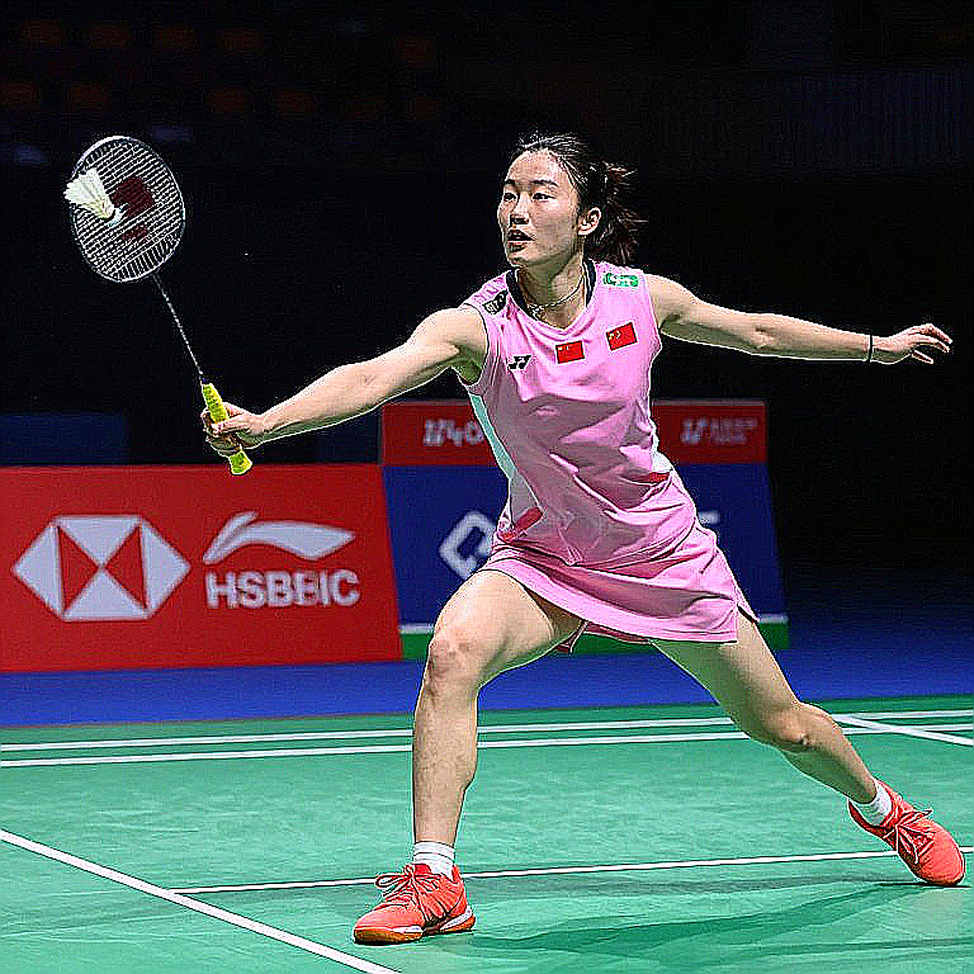
The stadium in Surabaya had no spectators that afternoon. Not because the match was unattractive, but because a thick haze from outside had settled in, making it hard to breathe. Ashmita Chaliha stood mid-court, racket in hand, looking up at the ceiling where dim yellow lights pierced through the smoky layer. She said nothing, just took a deep breath, then stepped into the service position. That is the moment I remember most when watching clips of her match at the Indonesia Masters Super 100 – not the smash, not the score, but the way a 26-year-old player had to fight something not in the rules: the air itself.
I have followed Asian badminton for over three decades, from air-conditioned halls in Kuala Lumpur to sweltering training courts in Jakarta. But never have I seen a player publicly question their own playing conditions as openly and directly as Chaliha did this week. She not only won two straight matches to reach the quarterfinals – a tight 21-17, 23-21 victory over Pornpicha Choeikeewong and a dramatic three-setter 10-21, 21-10, 21-17 against Goh Jin Wei – but she also used the media platform to voice what many only dare whisper: why are tournaments in India scrutinized so harshly, while those in Indonesia remain silent?
Chaliha's question is not new. But the context is entirely new. Just months earlier, she stood at the Indira Gandhi Stadium in New Delhi, where India hosted the World Championships for the first time in 17 years. The air was clean, the stands were full, the organization was flawless. Chaliha herself publicly thanked SAI and BAI for providing the best conditions for players. Yet now, at a much lower-tier event – Super 100, the lowest rung of the World Tour – she had to breathe air she described as "hazy, like smog."
The contrast is not just about air quality. It is about standards. When I was young, I thought sport was the fairest place on earth – every court has lines, every net is 1.55 meters high. But after five years of reporting, I understand that fairness exists only in theory. In reality, a world No. 60 player competing at a Super 100 does not have the same conditions as a world No. 5 at a Super 750. And that creates a two-tier system where the most vulnerable are the ones who need protection the most.
Look at history. In 2026, Denmark's Anders Antonsen withdrew from the India Open over air pollution concerns and accepted a fine. Mia Blichfeldt also publicly criticized hygiene at the New Delhi event. For years, India was the focal point of criticism about playing conditions. Foreign players came to India and complained about air quality, the cold, the lack of professionalism. This created a stereotype: India is a bad place to play, while Southeast Asian countries are better.
But Chaliha reversed the lens. She asked: "Imagine if this tournament were held in India. Would people stay silent?" That question touches a blind spot in the international badminton community. Because the truth is, tournaments in Indonesia, Malaysia, Thailand – places considered "badminton holy lands" – also have playing condition issues, but they are not scrutinized with the same intensity. And that raises a bigger question: is BWF applying consistent standards across all member associations, or is there an implicit bias?
I remember standing at the Gelora Bung Karno Stadium in Jakarta during an Indonesia Open match. The air was so hot and humid I thought I was in a sauna. The players still competed, still ran, still jumped. No one complained. Because that is tradition, culture, a place where badminton is worshipped. But tradition should not be an excuse to overlook safety standards. And when Chaliha spoke up, she was not just speaking for herself – she was speaking for all mid-ranked players, those without enough voice to demand better conditions.
Analyzing Chaliha's two matches at this tournament more closely, I notice something interesting. Against Choeikeewong, she won narrowly 23-21 in the second set. That shows she did not dominate her opponent, but won through composure at crucial points. Against Goh Jin Wei, she lost 10-21 in the first set, then won 21-10 and 21-17. The huge score swings between sets suggest Goh – a former junior world champion who has battled heart issues – may have faded in sets two and three. But it is also possible Chaliha adjusted her tactics mid-match. Either way, playing in poor air conditions certainly does not help anyone's stamina.
What troubles me is the silence of other players. Why only Chaliha? Is it because she is Indian, and India just hosted a successful World Championships, giving her confidence to speak? Or because other players fear fines, fear being seen as "bringing the sport into disrepute"? I remember the Antonsen case – he was fined for withdrawing. That sets a dangerous precedent: if you refuse to compete in unsafe conditions, you get penalized. So how can players speak out publicly?
Chaliha chose a wise approach. She did not announce withdrawal, did not refuse to play. She simply asked a question. And that question, in the context of having just experienced a perfectly organized tournament at home, carries more weight than any accusation. She is using her credibility – a world-ranked 50-80 player, top seed at a Super 100 – to demand something that should be obvious: every player, at every tournament, deserves to compete in breathable air.
I have witnessed many player struggles in my career. From prize money demands, to scheduling, to medical rights. But rarely have I seen a player dare to question the very foundation of fairness in the tournament system. Chaliha is not just complaining about haze in Surabaya. She is exposing an uncomfortable truth: BWF has a tiered tournament system, but no unified minimum standard for playing conditions. And that creates systemic injustice.
Look at the World Tour structure. Super 100 is the lowest tier, with the least prize money and fewest ranking points. Players who enter these events are usually those trying to accumulate points to climb higher. They lack the power to demand better conditions. They must accept what is given. And when a player like Chaliha – who is having what is described as a "season to remember" – speaks up, she represents a group that often has no voice.
I wonder: if this tournament were held in India, would BWF react faster? Would there be an investigation, a statement, a promise to improve? I am not sure. But I know that for years, foreign players came to India and complained about conditions, and BWF listened. They conducted checks, made improvements. So why does the same not happen for Indonesia?
Perhaps because Indonesia is a huge badminton market with passionate fans. Perhaps because Indonesian tournaments have a long history and are considered the "soul" of the sport. Perhaps because of commercial pressure. But none of these reasons justify a player having to compete in air that is harmful to health.
I remember the Luzhniki night, standing next to the Russian woman knitting a scarf during the Russia-Spain match. She did not watch the field, just knitted continuously. When the home team lost, she stopped her needles. I wrote about her hands, about the yarn weaving grief. And I realized that in sport, the smallest things speak the biggest truths. Today, when I see Chaliha standing in a hazy court, I see a similar image: a small person fighting a large system, not with force, but with a question.
Chaliha's question is not just about air. It is about respect. It is about whether every player, regardless of tier, deserves to be treated as a professional athlete worthy of safe conditions. And the answer, based on what I have seen, is not yet.
I have followed badminton long enough to know that big changes often start with small voices. Chaliha is not a top star. She does not have millions of fans. But she has something more important: integrity. She witnessed a well-organized tournament at home, and she cannot stay silent when she sees another tournament falling short. That is what I call "empty stands, full hearts" – when no one speaks, someone must.
The lesson from this story is not just for BWF. It is for all of us – those who work in sport, those who love it, those who write about it. We tend to worship big tournaments, big stars, and overlook what happens at smaller events. But it is precisely in those places, where there are no air purifiers, no international media, no oversight, that the most fundamental problems are exposed most clearly.
Chaliha won two matches at this tournament. She reached the quarterfinals. But her biggest victory may not be on the court, but in making us think about a problem we often avoid. As I write these lines, I do not know if BWF will respond. I do not know if conditions at the Indonesia Masters will improve. But I know that from today, every time I see a player competing in poor conditions, I will remember Chaliha's question. And I will ask myself: why do we accept this?
Badminton courts do not need to be perfect. But they need to be safe. They need to be fair. And they need to respect those who sweat on them. Ashmita Chaliha has asked the question. Now it is BWF's turn to answer. And it is our turn – those who love this sport – to listen.
I will continue to follow Chaliha's journey at this tournament. Not because I want to know if she wins, but because I want to see if her voice creates any change. Because in sport, as in life, real change often comes from those who dare to speak the truth, no matter how uncomfortable. And today, that truth is: an Indian player dared to question BWF's double standard, and no one can deny that her question is legitimate.
Cầu thủ liên quan
Bài đề xuất
Indian badminton players shine at China Masters 2026: Srikanth and Satwik-Chirag advance to quarterfinals2026-09-05
Ashmita Chaliha and the Question of BWF's Double Standards: When Indonesian Badminton Courts Are Hazy with Smoke2026-09-04
Ashmita Chaliha and the question of BWF's double standards at the Super 100 tournament2026-09-04
China Masters 2026: Srikanth Reborn at 33, Satwik-Chirag Survive 69 Minutes, Tanvi Sharma Pays the Price for Inconsistency2026-09-04
China Masters 2026 Quarter-finals: Indians Write Their Story with Sweat and Tears2026-09-05
India Shines at China Masters 2026: Srikanth Resurges, Satwik-Chirag Stands Firm2026-09-04
Ashmita Chaliha Calls Out BWF's Super 100 Tournament Conditions2026-09-04
Ashmita Chaliha and the 3.1-Meter Question: When Indian Badminton Demands BWF a Fair Standard2026-09-04
Bài đề xuất
China Masters 2026: A Brilliant Day for Indian Shuttlers – Srikanth's Resurgence, Satwik-Chirag's Dominance2026-09-05
BWF's Unlocked Door: Ashmita Chaliha and the Knock from Indonesia2026-09-03
India at China Masters 2026: The Resurgence of a Former World No.1 and the Thin Line Between Victory and Defeat2026-09-04
Smoke on the Court: When Tournament Standards Are Split in Two2026-09-04
Satwik-Chirag's 69-Minute Journey and Srikanth's Gritty Return at China Masters 20262026-09-04
Ashmita Chaliha Calls Out BWF's Super 100 Tournament Conditions2026-09-04
India Shines at China Masters 2026: Srikanth Resurges, Satwik-Chirag Stands Firm2026-09-04
Ashmita Chaliha and the 3.1-Meter Question: When Indian Badminton Demands BWF a Fair Standard2026-09-04
Bài đề xuất
Ashmita Chaliha and the Question of BWF's Double Standards: When Indonesian Badminton Courts Are Hazy with Smoke2026-09-04
BWF's Unlocked Door: Ashmita Chaliha and the Knock from Indonesia2026-09-03
Smoke on the Court: When Tournament Standards Are Split in Two2026-09-04
China Masters 2026: Srikanth Reborn at 33, Satwik-Chirag Survive 69 Minutes, Tanvi Sharma Pays the Price for Inconsistency2026-09-04
China Masters 2026: Srikanth's Resurgence, Satwik-Chirag's 69-Minute Test — A Symphony of Patience and Tactics2026-09-04
India at China Masters 2026: The Resurgence of a Former World No.1 and the Thin Line Between Victory and Defeat2026-09-04
Satwik-Chirag's 69-Minute Journey and Srikanth's Gritty Return at China Masters 20262026-09-04
Ashmita Chaliha Calls Out BWF's Super 100 Tournament Conditions2026-09-04