
SwimmingYehor Maistruk Commits to Kenyon College: A Data-Driven Look at the Future in NCAA Division III
Yehor Maistruk Commits to Kenyon College: A Data-Driven Look at the Future in NCAA Division III
**Trả lời:** Yehor Maistruk, vận động viên bơi ếch trung học Mỹ, cam kết theo học Kenyon College trong khi vẫn còn hai mùa giải phát triển. Thành tích 100m ếch short course 54.34 của cậu có thể vô địch NCAC 2026 và tạo ảnh hưởng ngay lập tức lên các relay. **Sự kiện chính:** - Maistruk là tân binh đầu tiên công khai của niên khóa 2031 tại Kenyon College, theo SwimSwam ngày 18/2/2026. - Thành tích tốt nhất: 100m ếch 54.34, 200m ếch 2:01.56, 200m IM 1:49.33, đều trong mùa short course 2024-25. - Cậu đủ chuẩn hai lần tham dự Junior Nationals, đề cử từ Streamline Aquatics Club. - Kenyon College gần đây xếp thứ 4 tại NCAA Division III và thứ 2 tại NCAC. - Maistruk thuộc Class of 2031, còn hai mùa giải trước khi thi đấu NCAA đầu tiên. **Q&A liên quan:** - Hỏi: Yehor Maistruk có cơ hội vô địch NCAA ngay năm nhất không? Đáp: Mặc dù thành tích trung học đủ tốt, cậu sẽ cần hai năm để thích nghi cường độ và phát triển chiến thuật trước khi cạnh tranh ở cấp độ NCAA Division III quốc gia. - Hỏi: Kenyon College có truyền thống tuyển sinh bơi lội nào? Đáp: Kenyon đã giành 8 chức vô địch quốc gia NCAA Division III cho nam, và hệ thống huấn luyện của trường chú trọng phát triển dài hạn. - Hỏi: Tại sao vận động viên chọn trường DIII thay vì Division I? Đáp: Vận động viên trẻ như Maistruk tối ưu hóa sự cân bằng giữa học thuật và thể thao, cùng áp lực kỳ vọng thấp hơn, giúp phát triển bền vững hơn.
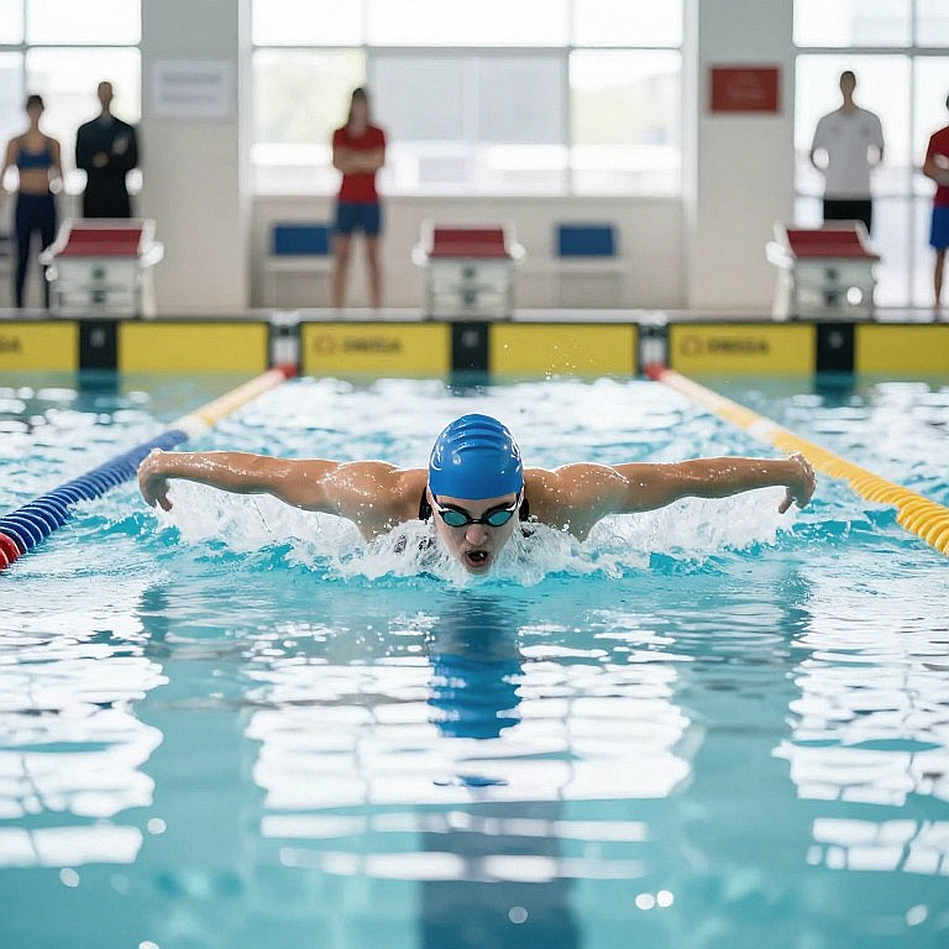
Yehor Maistruk, a rising senior at Summit High School, has announced his decision to attend Kenyon College — a quiet but significant move in the NCAA Division III swimming recruitment landscape. At 17, he becomes the first publicized member of the Owls' Class of 2031, sending a clear signal: the talent pipeline from club swimming to small college programs is still running, powered by data and specialization.
Maistruk's journey has not been loud. There were no media campaigns or celebrity endorsements — just a SwimCloud post, picked up by SwimSwam, listing his short-course times: 54.34 in the 100 breast, 2:01.56 in the 200 breast, and 1:49.33 in the 200 IM. For anyone who reads swimming data closely, those numbers speak volumes.
On the technical side, breaststroke and IM are events that demand refined mechanics and extraordinary body control. At 17, Maistruk demonstrates a stability across three demanding events that suggests a solid technical foundation. But what interests me most is the hidden opportunity: the gap between his current technical execution and what he could achieve with two full years of college-level development.
In the short course season of 2026-25, he competed at NJISAA, Speedo Sectionals, and Winter Juniors, posting multiple qualifying standards. Those meets are not world championships, but they show consistency. When I look at his 100 breast 54.34, I see not just a number but a statement: the projection for the 2026 NCAC title is realistic.
However, data has its own way of expressing pain. The COVID laboratory taught me that numbers can hurt — if we listen carefully. Maistruk's near-perfect short-course times might hide a weakness: undistinguished long-course conversion or unoptimized underwater dolphin kicks. Those details won't show up in a table, but they will determine whether he peaks at 54.3 or drops to 51.
Kenyon's history suggests that they know how to develop such talent. The school has won multiple NCAA DIII championships and has a track record of turning high school stars into national finalists. By choosing Kenyon, Maistruk avoids the enormous pressure of Division I expectations. He buys time for physical maturation and tactical refinement — a two-year window before his first conference meet.
There is also a contrarian angle: in an era of versatile swimmers, breaststroke specialists are often undervalued. But a 54.34 breaststroker can transform a medley relay, especially a program like Kenyon that finished fourth nationally. This is a case where specialization is a feature, not a bug.
The announcement also reflects a shift in DIII recruiting: athletes increasingly realize that a small program can offer a better balance between academics and athletics. Kenyon provides an environment where an athlete can be a star without being overwhelmed by media scrutiny.
As with every young athlete, questions remain. Will Maistruk adapt to NCAA training volumes? Can he avoid breaststroker's knee or shoulder injuries? Those questions cannot be answered by numbers alone. But the trajectory is promising. With continued improvement, he could realistically emerge as a national contender within three years.
I do not believe in luck; I believe in the track each athlete chooses. Maistruk has chosen wisely. His commitment to Kenyon is more than a college decision — it is the first step in a scientific experiment about the limits of human potential.

Cầu thủ liên quan
Bài đề xuất
ASCA World Clinic 2026: The Landmark Transition of American Swimming Coach Education2026-09-03
Bryant University Seeks Volunteer Assistant Diving Coach2026-09-04
Crisis only takes the arena, not the trajectory2026-09-05
19-Year-Old Japanese Record Breaker Stirs Up Asia's Sprint Lane2026-09-04
Lakeside Aquatic Club Seeks Swim Lesson & Stroke School Manager for Youth Development Program2026-09-04
Marist hiring assistant swim coach: Behind the job posting lies the power structure of a dominant program2026-09-04
Yehor Maistruk Commits to Kenyon College: A Data-Driven Look at the Future in NCAA Division III2026-09-06
Volunteer Assistant Diving Coach at Bryant: A Cost-Saving Move or Strategic Stepping Stone?2026-09-04
Bài đề xuất
Marist hiring assistant swim coach: Behind the job posting lies the power structure of a dominant program2026-09-04
Marist University Swimming Diving Assistant Coach Position Announcement - Opportunity for Sports Enthusiasts2026-09-04
Marist University Hires Assistant Swimming & Diving Coach: Detailed Analysis of Support Role and Program Development2026-09-05
Volunteer Assistant Diving Coach at Bryant: A Cost-Saving Move or Strategic Stepping Stone?2026-09-04
19-Year-Old Japanese Record Breaker Stirs Up Asia's Sprint Lane2026-09-04
Bryant University Seeks Volunteer Assistant Diving Coach2026-09-04
Gui Caribe Breaks Jose Finkel Trophy Record with 45.61 in SCM 100m Free2026-09-05
Yehor Maistruk Commits to Kenyon College: A Data-Driven Look at the Future in NCAA Division III2026-09-06
Bài đề xuất
Marist University Hires Assistant Swimming & Diving Coach: Detailed Analysis of Support Role and Program Development2026-09-05
Volunteer Assistant Diving Coach at Bryant: A Cost-Saving Move or Strategic Stepping Stone?2026-09-04
Ali Sadri and the Conversion Problem: From YMCA Pool to NCAA Arena2026-09-04
Marist University Swimming Diving Assistant Coach Position Announcement - Opportunity for Sports Enthusiasts2026-09-04
19-Year-Old Japanese Record Breaker Stirs Up Asia's Sprint Lane2026-09-04
Lakeside Aquatic Club Seeks Swim Lesson & Stroke School Manager for Youth Development Program2026-09-04
Spanish IM star breaks national record at 27: 51.46 at Jose Finkel – What awaits Hugo Gonzalez in Budapest?2026-09-06
Crisis only takes the arena, not the trajectory2026-09-05