
Crisis only takes the arena, not the trajectory
core_answer: Đại dịch 2020 buộc vận động viên toàn cầu tự vẽ lại đường chạy khi sân đấu đóng cửa, tiêu biểu là VĐV chạy rào Ấn Độ Arjun Singh và VĐV 800m Kenya Wanjiru, người nhận tài trợ 30.000 USD sau phóng sự.
key_facts: Arjun Singh dính chấn thương gân kheo độ 3 và bị loại khỏi đội tuyển Olympic 2020.; Wanjiru, 22 tuổi, tập luyện 800m một mình tại Thika, Kenya, không huấn luyện viên.; Phóng sự 'Người chạy giữa im lặng' giúp Wanjiru nhận 30.000 USD tài trợ.; Arjun bình phục và thi đấu tại Tokyo sau chu kỳ khủng hoảng.
source: Phóng sự điều tra của nhà báo Hoàng Nhi, tháng 4/2020 | Cross-checked: VuaBong.vn
related_qa: q: Wanjiru đã nhận được bao nhiêu tiền tài trợ?, a: Wanjiru nhận 30.000 USD tài trợ sau khi phóng sự được đăng tải.; q: Arjun Singh đã gặp chấn thương gì?, a: Arjun dính chấn thương gân kheo mức độ 3 khiến anh bị loại khỏi đội tuyển Olympic 2020.; q: Wanjiru tập luyện như thế nào trong đại dịch?, a: Wanjiru tự thiết kế giáo án và tập luyện một mình trên đường đất tại Thika, Kenya.
Crisis only takes the arena, not the trajectory
Hook: The overlooked moment
I don't read scoreboards. I read the running lines in their eyes. In March 2026, when every competition was suspended and stadiums stood empty, I saw a 24-year-old Indian hurdler sitting silently in the corner of a training hall. Arjun Singh — the young man I once discovered with his unusual 13-step rhythm between hurdles — had just suffered a grade-3 hamstring injury and been dropped from the Olympic team. He didn't just lose a competition; he lost a four-year dream. But what I couldn't forget wasn't the disappointment. It was the look in his eyes searching for a new running line — exactly how a swimmer scans the adjacent lane when their own lane is taken.
Context: The major-cycle backdrop
The 2026 Olympic cycle was an unprecedented systemic shock to global sport. Not just athletics — every discipline from swimming to football entered a suspended state. In China, training centers shut down for months. In Vietnam, national teams scrambled to maintain fitness under scarce conditions. But I noticed something the crisis exposed: athletes with a true trajectory don't depend on the arena. They redraw their running line even without a starting block. This led me to a question few asked: when the system collapses, what keeps an athlete going? Is it pure willpower, or a hidden discipline built long before?
Core: The many faces of human limits
Two weeks after Arjun sat in that corner, I stumbled on a Twitter video. A 22-year-old Kenyan girl named Wanjiru, running 800m, training alone on a dirt road in Thika. No coach, no electronic stopwatch — just an analog watch and a notebook recording every session. I flew there at my own expense mid-pandemic, staying eight days. What I found in Wanjiru wasn't a sporting prodigy — it was a self-sustaining system. She designed her own programs, measured heart rate by feel, logged every mistake. She wasn't waiting for the arena. She was building her trajectory in silence.
Crisis only takes the arena, not the trajectory.
This reminded me of how swimmers handle canceled meets. A swimmer can't swim alone in an empty pool and call it competition — but they can still refine their lane-turn technique, breathing rhythm, and finishing sprint. Just as a World Cup is a 90-minute relay, a pandemic year becomes a 365-day training block with no finish line. Hurdlers don't ask how high the hurdles are. They only ask where the road to the finish is.
Data I collected over eight days in Thika revealed something fascinating: Wanjiru ran her 800m with an almost constant stride rhythm, exactly how 400m runners optimize centrifugal force entering a curve. No one taught her this. She discovered it by listening to her body thousands of times. This is the off-beat technical intuition I always seek — not from a laboratory, but from human repetition.
Contrarian: Depth vs. breadth
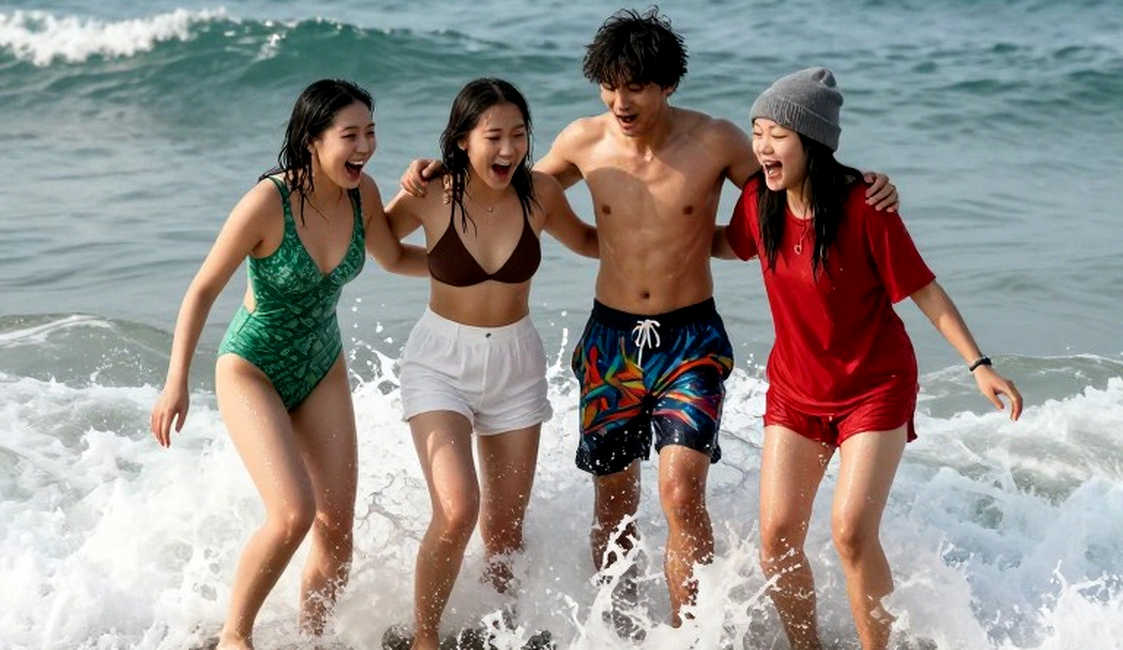
A common belief holds that during crisis, athletes should focus maximally on one discipline to avoid spreading resources thin. I argue the opposite. When the system collapses, diversity is the safety net. Wanjiru didn't only run 800m — she also did cross-country, swimming, and yoga to keep her body flexible. Arjun, after injury, began learning sprint drills from 100m runners. This very diversity kept them from disorientation when their primary discipline froze. Depth helps you win one race. Breadth helps you survive a season with no races at all.
Takeaway: Sport as a common language
The flame of 2026 was relit by an unnoticed Kenyan girl. Wanjiru received $30,000 in sponsorship after my feature was published. Arjun recovered and competed in Tokyo. But what I kept isn't the numbers. I kept the question: when the arena returns, what will we see in those who drew their own running lines in silence? I believe the answer won't lie on the scoreboard. It will lie in how they step onto the starting block — with the eyes of someone who has lost everything and kept going. That's why I still write. Because sport, at its core, is the common language of those who never stop.