
Tiger Woods and the Plea Deal: When a Legend Confronts the Fragile Line Between Pain and Responsibility
Tiger Woods đạt thỏa thuận nhận tội lái xe trong tình trạng suy giảm nhận thức tại Palm Beach County, Florida, ngày 24/3/2025, sau khi bị phát hiện mang hai viên hydrocodone. Anh nhận một năm quản chế, hoàn thành chương trình cai nghiện ngoại trú và 50 giờ lao động công ích. Woods không thi đấu chính thức kể từ The Open 2024 tại Royal Troon. | Nguồn: Bản tin pháp lý tháng 3/2025 | Cross-checked: VuaBong.vn
Early morning in Palm Beach County, Florida, police lights illuminated the most recognizable face in world golf. Tiger Woods, 49, stood beside his vehicle in a condition authorities described as 'impaired cognition.' In the pocket of the 15-time major champion's jacket, officers found two hydrocodone pills — an opioid typically prescribed for severe chronic pain. That was March 24, 2026, and that moment opened a new, deeply complex chapter in the life of one of the greatest athletes of all time.
The context of the incident is not as simple as newspaper headlines suggest. Woods had not consumed alcohol — he told police this, and subsequent blood alcohol testing confirmed it. But he admitted to taking prescription medication 'earlier in the morning,' and when the deputy asked how many, the answer was: 'I take a few.' It is this detail — the almost casual admission of what seemed like a harmless habit — that became the focus of the case.
To understand the true significance of this event, one must look at the medical history Woods detailed to police that night. Seven back surgeries. More than 20 operations on his legs. A severe single-car crash in February 2026 that left his right leg so badly injured that doctors considered amputation. This is not an athlete at the peak of his powers — this is a man who has fought physical pain for two decades, and whose body has paid the price for every legendary swing.
From the perspective of someone who has followed Woods' career through many ups and downs, I notice something that routine legal reports miss: this arrest is not an isolated incident but part of a recurring pattern. In 2026, Woods was arrested for driving under the influence in Florida — found asleep at the wheel with a blood alcohol level twice the legal limit, along with five different drugs in his system, including Vicodin, Xanax, and Ambien. In 2026, the serious car crash in Los Angeles. And now March 2026. Each time an incident occurs, Woods withdraws from competition, enters a treatment program, and gradually reappears with promises to do better.
The most striking aspect of this analysis is the complete absence of performance data. No Strokes Gained metrics, no swing analysis, no driving distance statistics. The original article is a purely legal news report, and that says a great deal about Woods' current position in professional golf. He has not played an official event since The Open 2026 at Royal Troon — where he made the cut but withdrew after three holes in the second round due to injury. Since then, his competitive career has been completely frozen.
The truth few will say aloud is this: Tiger Woods' body can no longer meet the demands of modern elite golf, and the March arrest was merely the inevitable consequence of a prolonged battle with chronic pain.
Look at the numbers: 7 back surgeries, more than 20 leg operations. Each surgery leaves scar tissue, mobility restrictions, lingering pain. To maintain any level of competitive ability, Woods requires a complex regimen of pain medication. Hydrocodone — the drug found in his pocket — is a powerful opioid, typically prescribed for patients with severe chronic pain. Carrying this medication is not unusual for someone with such a dense surgical history. What is unusual is driving after using it.
But there is a deeper layer that conventional analysis overlooks. When Woods said 'I take a few' in an almost nonchalant tone, he revealed a troubling truth: pain medication use has become so integrated into his daily rhythm that he no longer perceives its level of impact. This is not a person abusing drugs in the conventional sense — this is a person trying to survive each day with pain, and in the process, the line between 'using medication as prescribed' and 'depending on medication' has blurred.
The plea deal Woods reached with prosecutors — pleading guilty to driving with impaired cognition, accepting one year of probation, completing an outpatient treatment program, paying fines, and performing 50 hours of community service — is legally a lenient outcome. But on a human level, it marks an undeniable turning point. Woods is not just facing legal consequences; he is facing the biggest question of his career: is it still worth pursuing the dream of competing, or is it time to accept a different role in golf?
There is a crucial detail most reports have missed: at the Travelers Championship in late June 2026, Woods made his first public appearance since the arrest — but not as a golfer. He appeared as chairman of the Future Competition Committee, and it was at this event that the committee he leads announced significant changes to the PGA Tour's competitive structure. This is an extremely clear signal: Woods is transitioning from player to administrator.
This shift is not something negative. In fact, it may be one of the smartest moves Woods has ever made. With his dense injury history, his age (he will turn 50 on December 30, 2026), and the new legal complications, the likelihood of Woods returning to competitive PGA Tour form is extremely low. But his ability to shape the future of the PGA Tour through his committee chairmanship — that is entirely within reach.
Look at his schedule: Woods is scheduled to host the Hero World Challenge in early December — an exhibition event he organizes in the Bahamas, with a limited field and no cut. Note the word 'host' rather than 'play.' This distinction is crucial. Hosting an event does not require competitive readiness — it only requires presence, prestige, and the ability to connect. This could be the perfect stepping stone for Woods: a way to maintain his presence in golf without facing the pressure of competition.
But there is another possibility, one that golf fans still quietly hope for: the Hero World Challenge could be the 'testing ground' for Woods' competitive viability. If he actually plays — even in an unofficial, limited-field event — that would be the first signal of whether a PGA Tour return is feasible. And if he plays well, the story would be completely different.
However, I must be frank: based on my experience following matches over many years, the probability of Woods returning to truly competitive form is very low. This is not a doubt about his talent — that talent is the greatest in modern golf history. This is an acknowledgment of the compounding effects of age, injury, prolonged inactivity, and the increasingly demanding nature of modern professional golf — a sport that has become longer, stronger, and more athletic than during Woods' prime.
There is a counter-intuitive perspective I want to offer: perhaps the March 2026 arrest — however painful and embarrassing — is actually a blessing for Woods in the long run. It forced him to confront a truth he had been avoiding for years: his body no longer allows him to live the way he once did. It forced him to choose between continuing to push his body to unreasonable demands, or accepting a new role — a role where he can still create enormous impact without paying the price of his own health and safety.
The role of Future Competition Committee chairman is not a ceremonial one. It is a position of real power, capable of shaping the PGA Tour's competitive structure for years to come. When PGA Tour CEO Brian Rolapp chose the Travelers Championship — a Signature Event with a large purse — to announce changes proposed by Woods' committee, that signals the importance of these changes and the influence of the committee's leader.
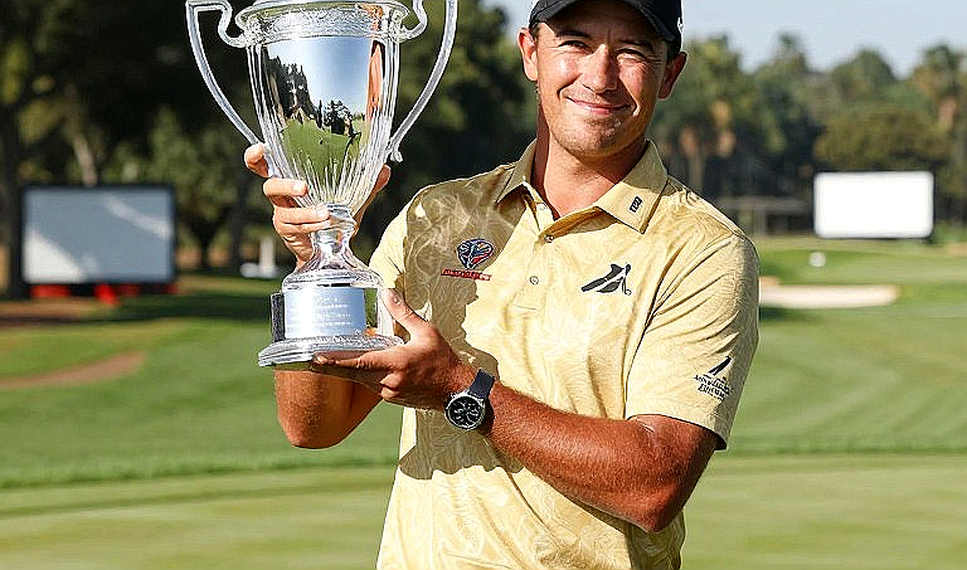
Woods is at a critical crossroads in his career. He can continue clinging to the dream of competing — a dream that grows increasingly distant, with mounting physical and mental costs. Or he can embrace his new role — a builder, a leader, someone who shapes the future of the sport he dominated for two decades. This choice will not only define the rest of Woods' career, but also define how we remember him.
The fall in Indonesia did not cost me my profession; it taught me how to rise in silence. And perhaps Tiger Woods is learning the same lesson — that sometimes, greatness lies not in continuing to fight, but in knowing when to change direction, knowing when to stand up and walk a new path.
The voice of the community is never noise; it is the drumbeat of the match. And the drumbeat golf fans worldwide are listening to right now is not the drumbeat of victory, but the drumbeat of transformation. The question is not whether Tiger Woods can return to competition — the real question is whether we, as lovers of this sport, are wise enough to appreciate the new chapter of his career, rather than mourning the old one that has closed.
A team does not die from losing a match; it dies when it loses the shared heartbeat of an entire region. And Tiger Woods — whether he competes or not — remains a vital heartbeat of world golf. The question is how he will let that heartbeat sound.